Merkle Science · Crypto compliance
Redesigning crypto compliance and forensic workflows around the analyst's job
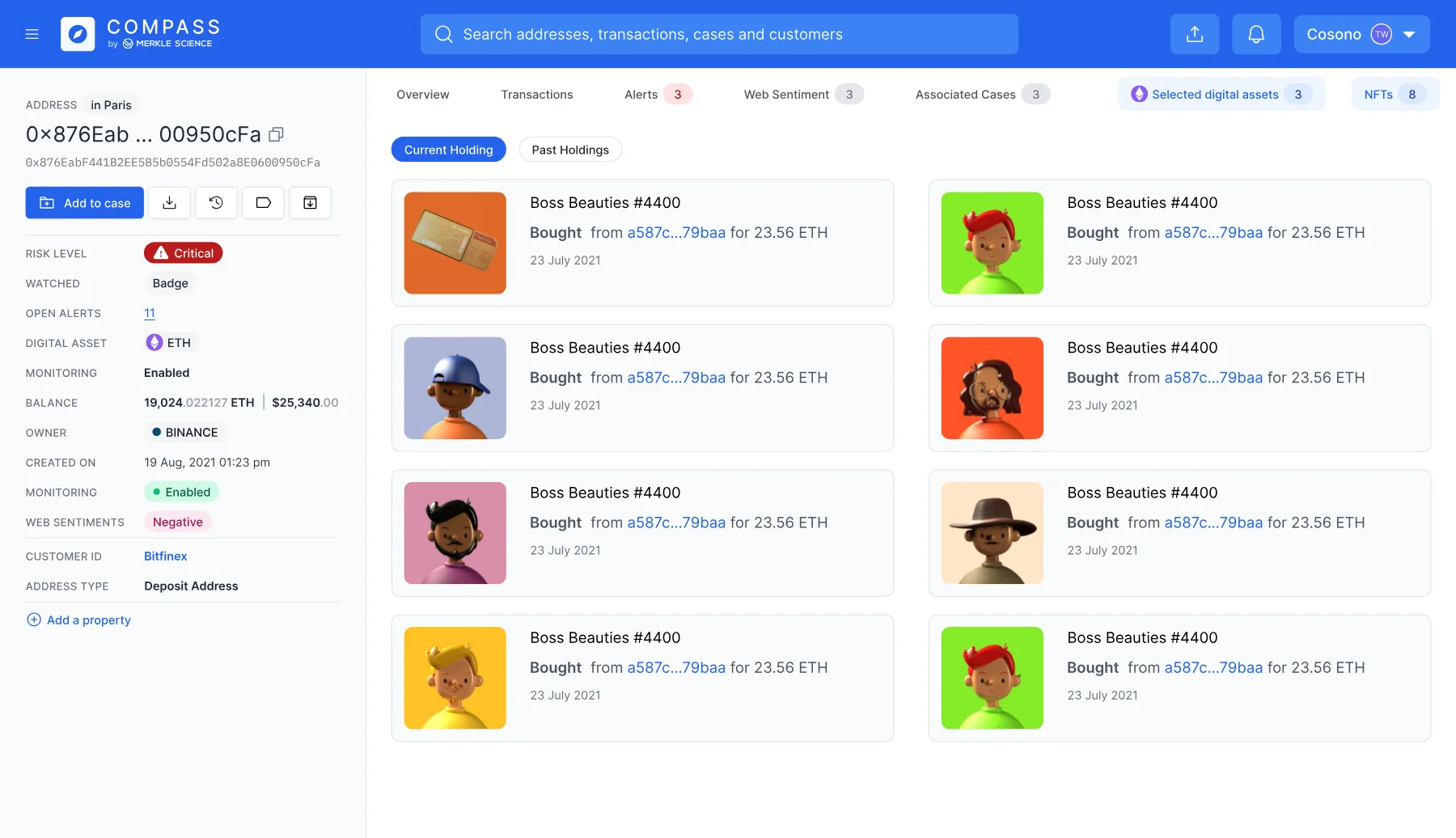
Compliance officers and forensic analysts at Merkle Science review wallet risk, transaction behaviour, and suspicious activity. We redesigned those investigation workflows around role-based dashboards, filtering, review, and reporting.
- Client
- Merkle Science
- Sector
- Crypto compliance
- Our work
- Research and interface design
01
Details
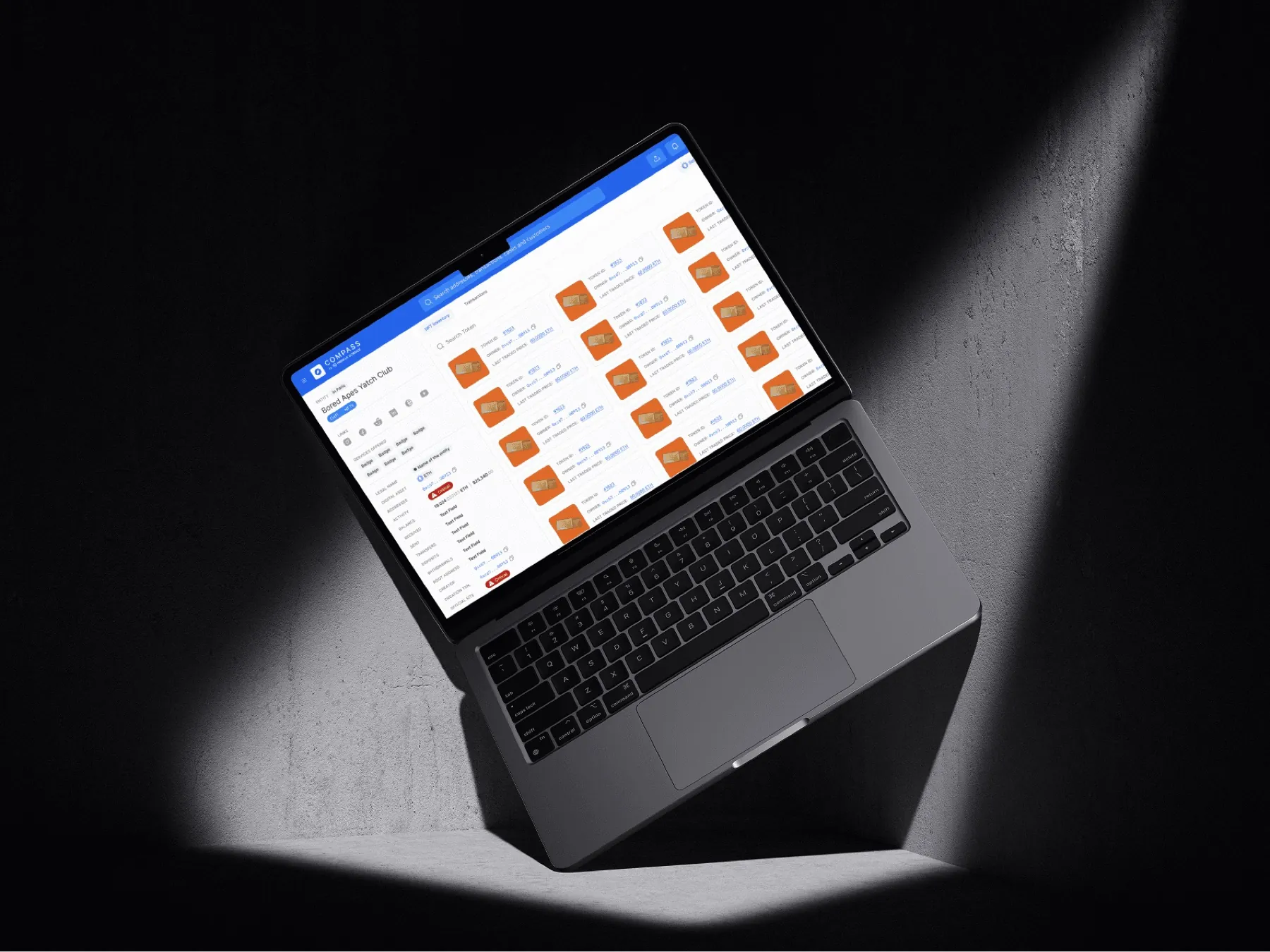
Platform: Merkle Science, a cryptocurrency compliance and forensic-investigation product.
Objective: Make a data-heavy product easier for compliance officers and forensic analysts to use without removing the detail their investigations required.
Company context: Merkle Science later reported more than $24M in Series A funding and serves crypto businesses, financial institutions, and government agencies.
02
Finding the core usability and compliance problems
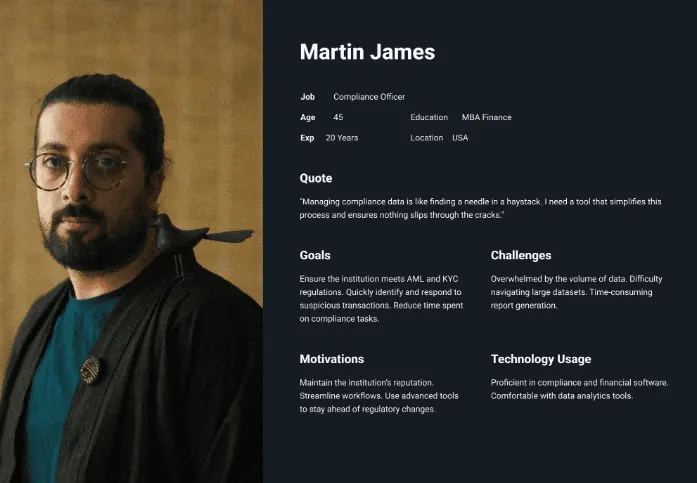
When we started, the platform already covered transaction monitoring, forensic investigations, and compliance training. The interface made those jobs harder to learn and slower to complete than they needed to be.
We began with three questions: who the primary users were, where cryptocurrency-risk analysis was hardest, and how the product could present data more simply without hiding critical detail.
We ran a workshop with product, customer support, engineering, and marketing to map the platform’s capabilities and the main user problems. Compliance officers were overloaded with data, and analysts needed complete transaction histories and a faster way to create reports.
03
Problem statement
Compliance officers and forensic analysts had to work through dense data, with very little they could customise, while investigating crypto-related risk.
04
Goals and success metrics
Dashboard: Reduce the time compliance officers spend sorting and prioritising risk data.
Reporting: Make evidence review, investigation history, and report creation easier to complete.
Product position: Keep the depth analysts expected, and give each role more control over what appeared first.
05
Competitive analysis
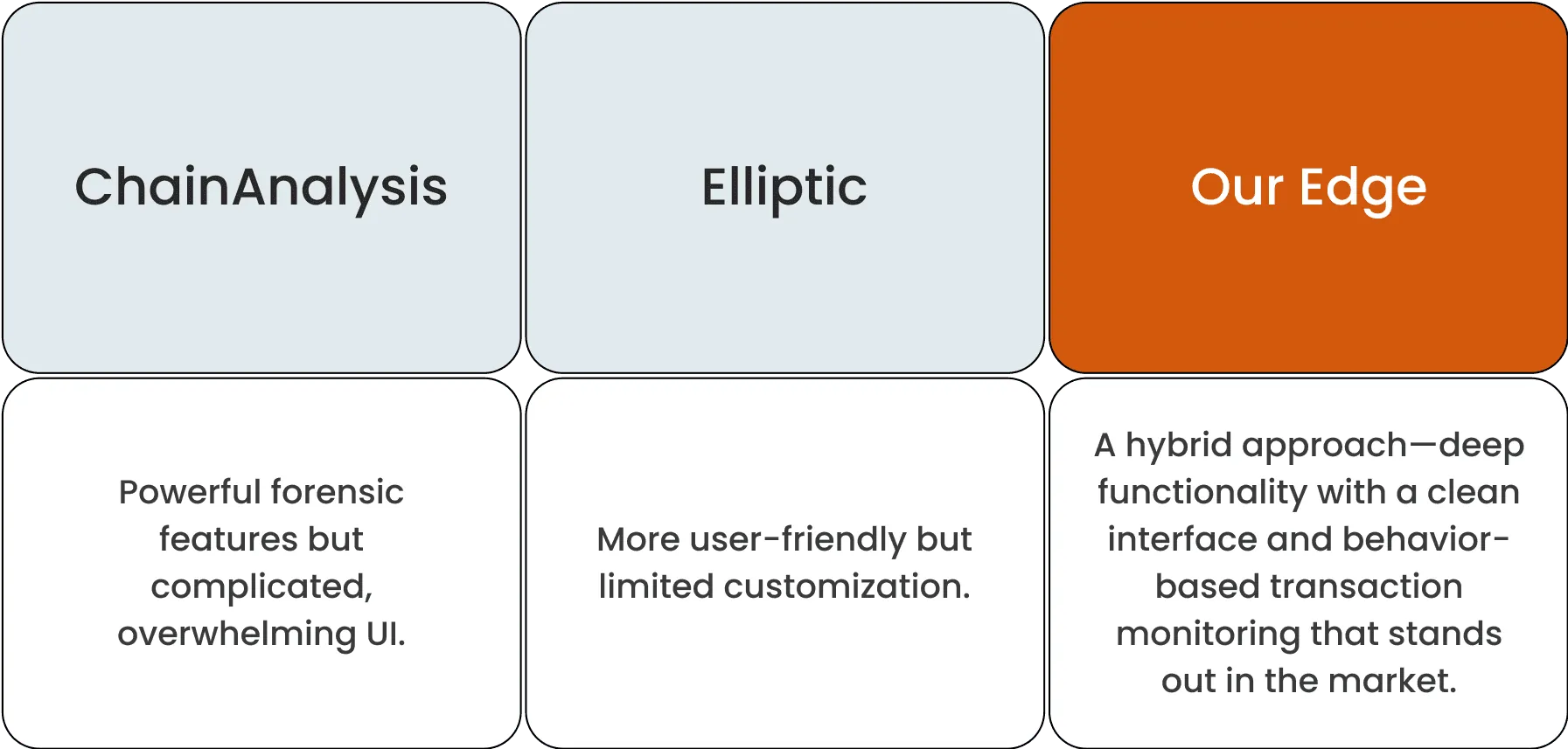
Chainalysis: We found deep forensic capability, but the interface was dense.
Elliptic: The interface was simpler, but you could customise less of it.
Direction: Keep the investigative depth, simplify the main workflows, and make behaviour-based monitoring easier to review.
06
Prototyping the main workflows

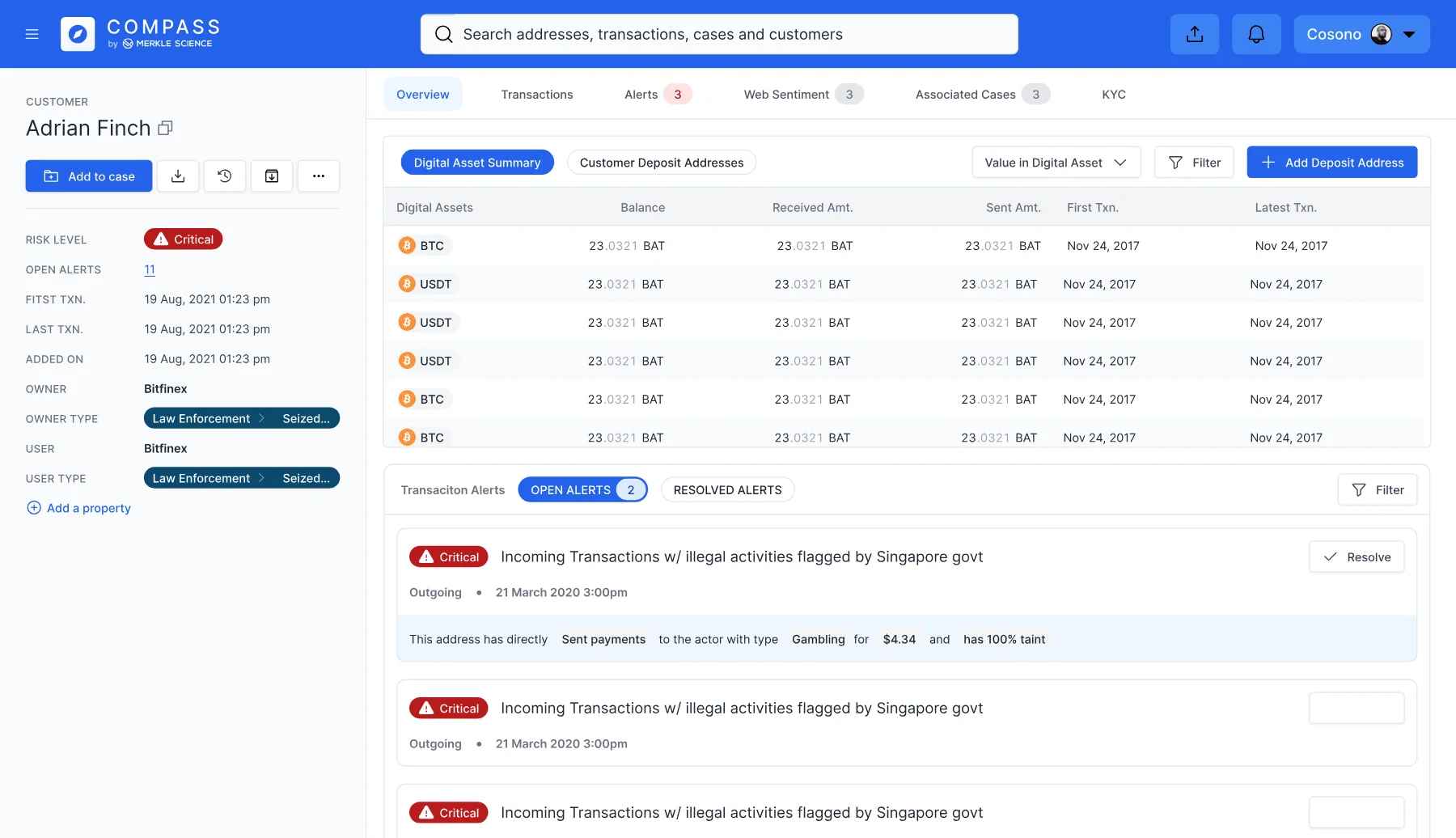
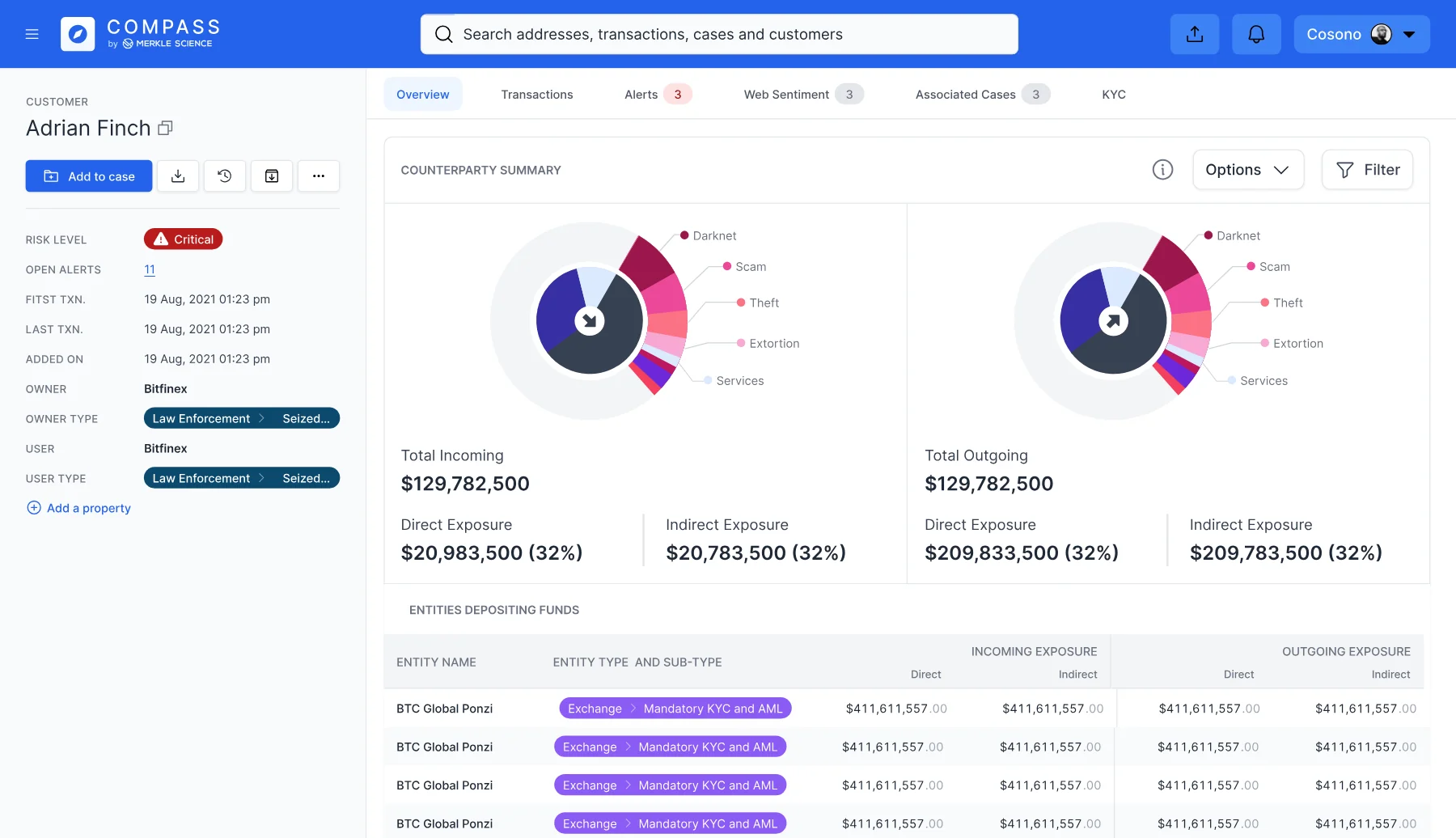
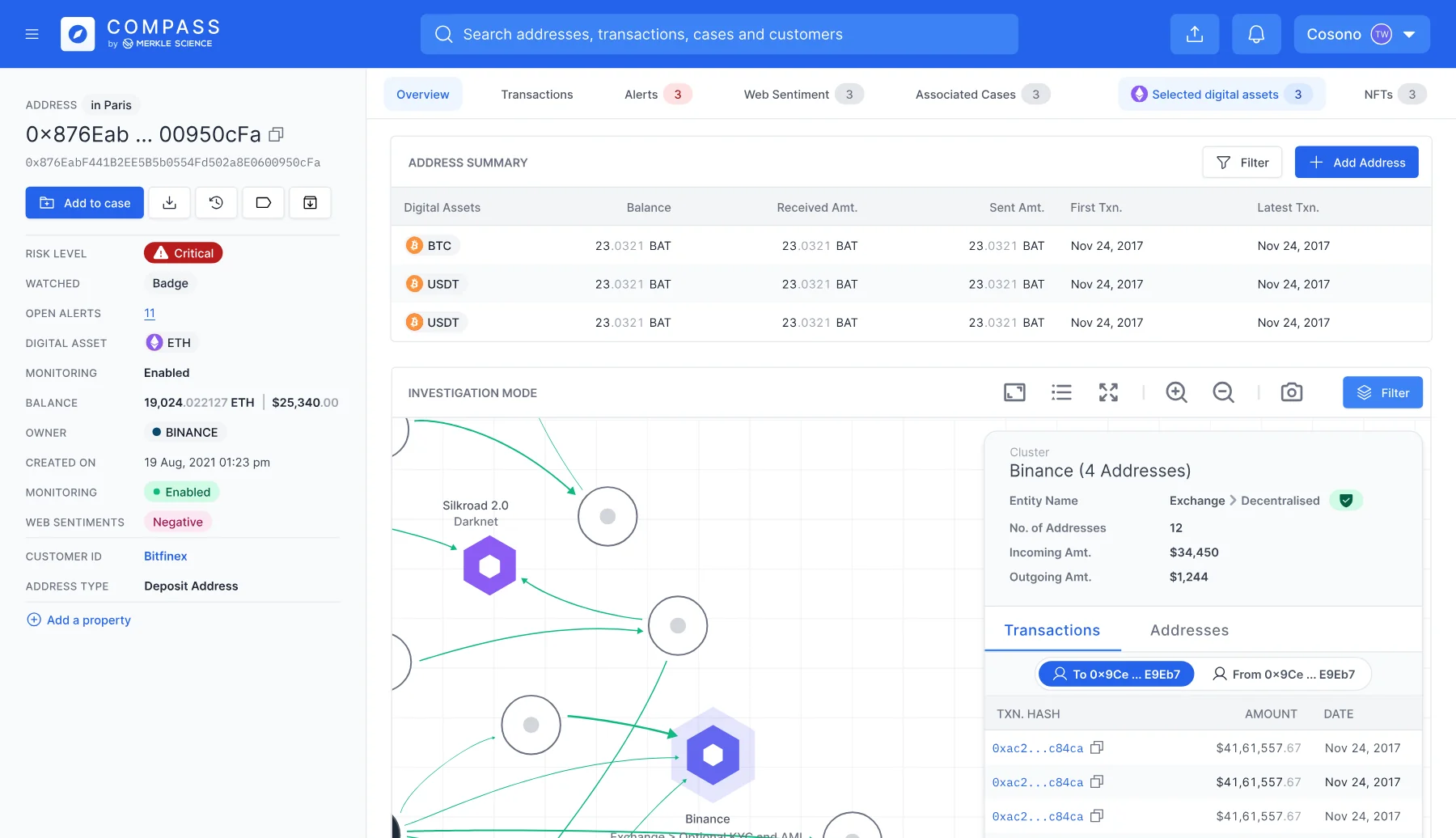
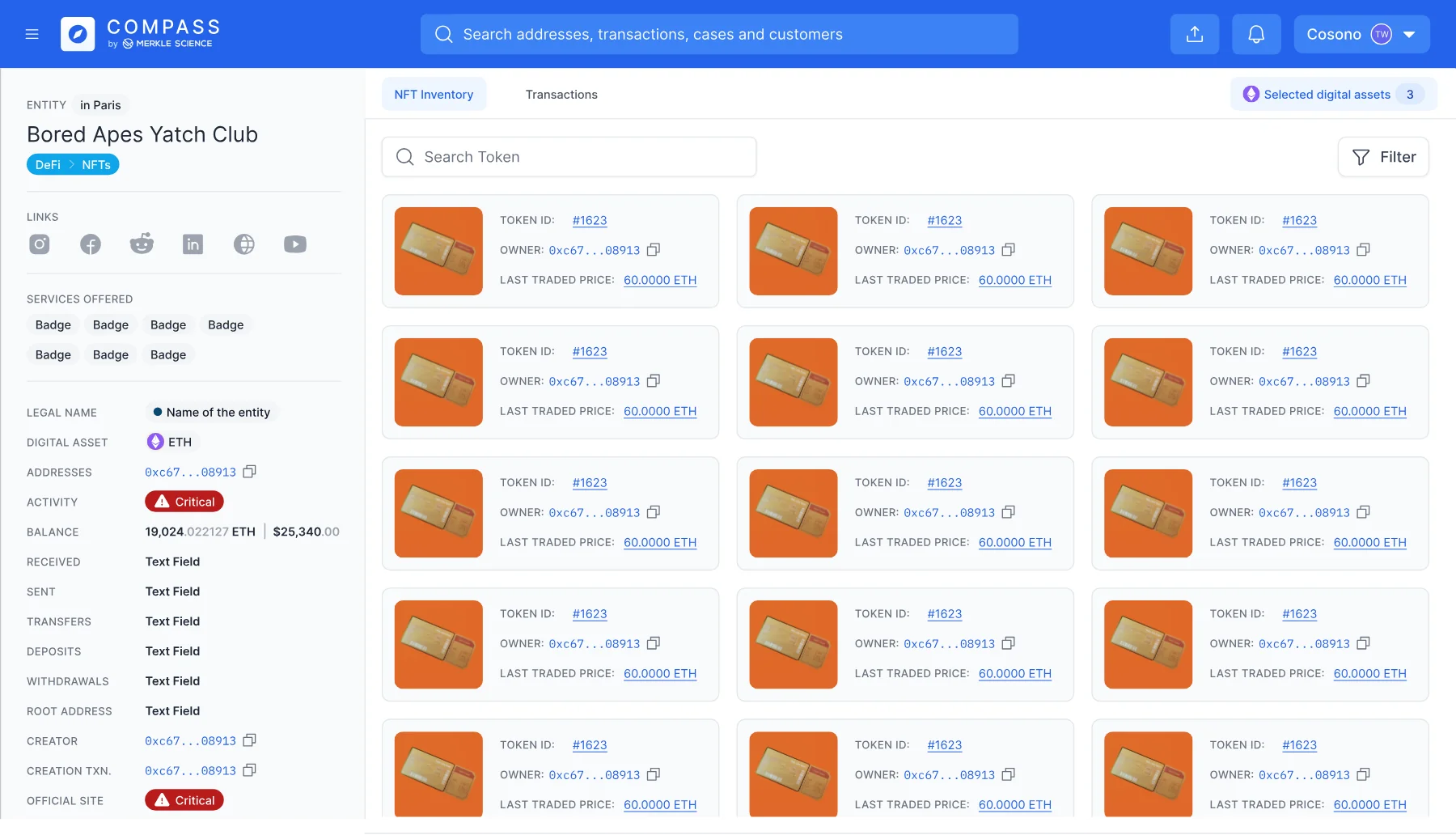
We mapped out the essential workflows (transaction overview, alert review, and case reporting) and focused on keeping the navigation clear and the screens uncluttered.
Then we added the visual system and representative charts and tested the information flow with selected compliance officers.
We built interactive Figma prototypes with filters, chart transitions, and a reporting flow that let forensic teams attach evidence.
07
Testing and refining the prototype
We tested and revised these parts of the prototype:
Prototype validation: We checked if role-specific navigation, filters, and investigation history made the core tasks easier to follow.
Dashboard customisation: Compliance officers could choose which risk signals and queues appeared first.
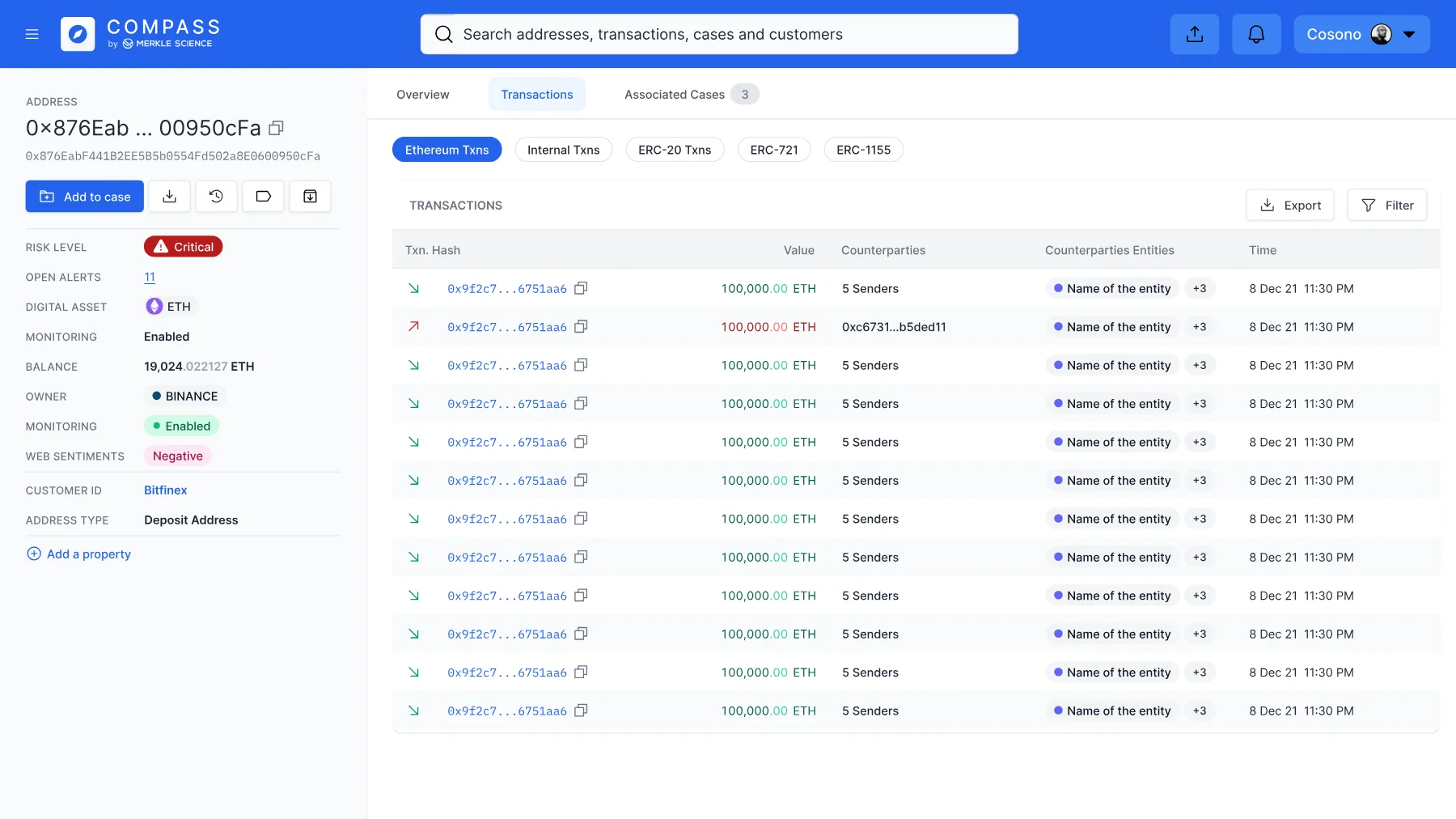
Forensic reporting: Analysts could gather evidence, review transaction history, and prepare the export in one workflow.
08
Design direction
We used the research and competitive review to prioritise the next design changes with the team.
The main proposals were:
A customisable dashboard where compliance officers choose the first widgets they see, with filters for risk score, geography, and wallet type.
A forensic toolkit with transaction metadata, visual overlays, timeline views, and report templates for investigators and legal teams.
Behaviour-based monitoring that flags anomalous transactions and shows suspicious activity in a clearer review queue.
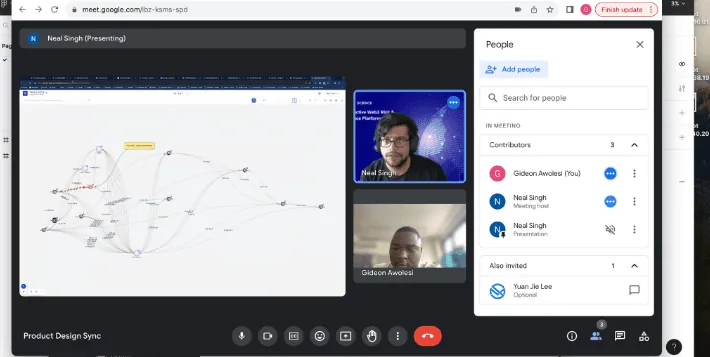
During an internal demo, a compliance officer from a pilot client said, “I finally don’t feel like the data is yelling at me.”
09
Company adoption and client trials
10
Larger clients and government trials
Existing clients later recommended Merkle Science to larger crypto exchanges.
The company went on to run trials with Binance and Crypto.com, and a live testing session with U.S. government agencies.
Government use: The platform was used in pilot work with federal law enforcement. This case study does not attribute those company outcomes to the interface redesign alone.