Nifty League · Web3 gaming
Designing the dashboard and player economy for a Web3 gaming platform
Nifty League had to explain wallets, player assets, and credits to crypto-native players and to people who were new to Web3. We led the design of the public pages, the game dashboard, and the credit-system logic. Nifty League later announced a $5M seed round.
- Client
- Nifty League
- Sector
- Web3 gaming
- Our work
- Product and interface design
01
About the project
We worked on the public pages, marketing surfaces, game dashboard, player systems, asset logic, credit-system UX, and interactive prototypes.
What it is: Nifty League was a Web3 gaming platform built around competitive play, player-owned assets, rewards, NFTL utility, and the wider Niftyverse. The product had to explain wallet connection, game entry, player assets, credits, marketplace actions, and dashboard management to crypto-native players, and also to people who were new to Web3.
Outcome: Nifty League later announced a $5M seed round led by RSE Ventures to expand its NFT gaming metaverse. This case study covers our work on the public pages, game dashboard, player economy, and product flows.
02
Prototype

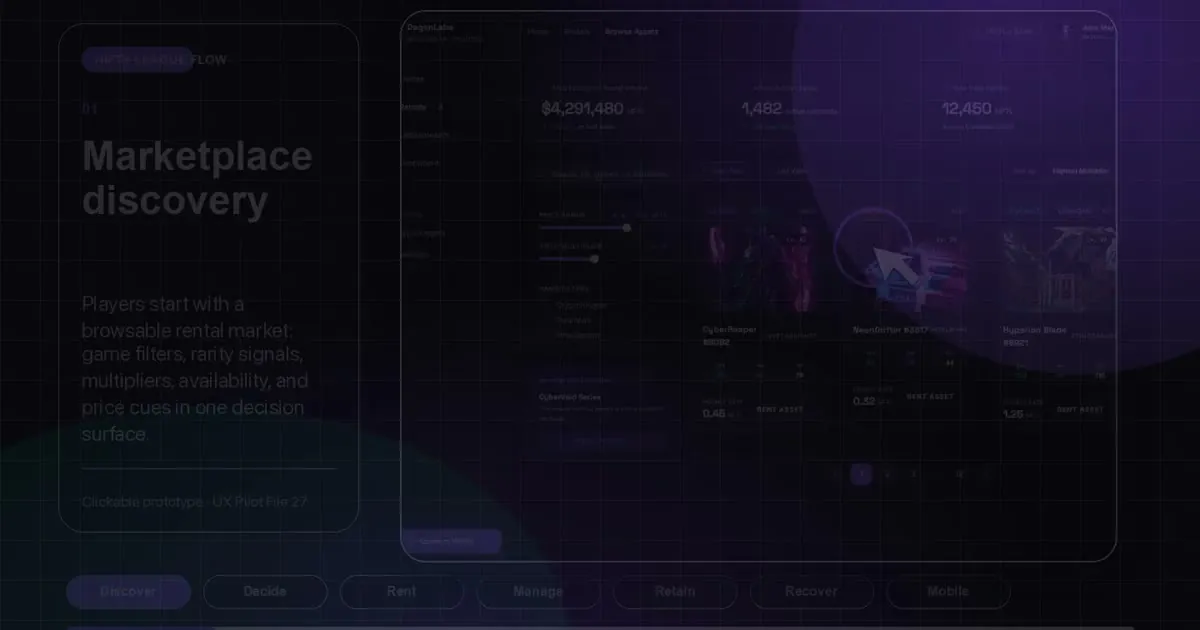
Animated flow: The video follows the clickable prototype through marketplace discovery, asset detail, rental confirmation, dashboard management, the game hub, leaderboards, wallet onboarding, failure recovery, settings, and mobile screens.
Interactive prototype: /prototype/niftyleague/. It starts with discovery and the asset decision, then moves through rental, management, retention, recovery, and mobile use.
03
The product problem
A lot of Web3 games bury the game itself under token dashboards, jargon, and wallet actions that don’t connect to anything. Players needed to understand asset ownership, rentals, rewards, game access, and credits without feeling like they were using a finance product.
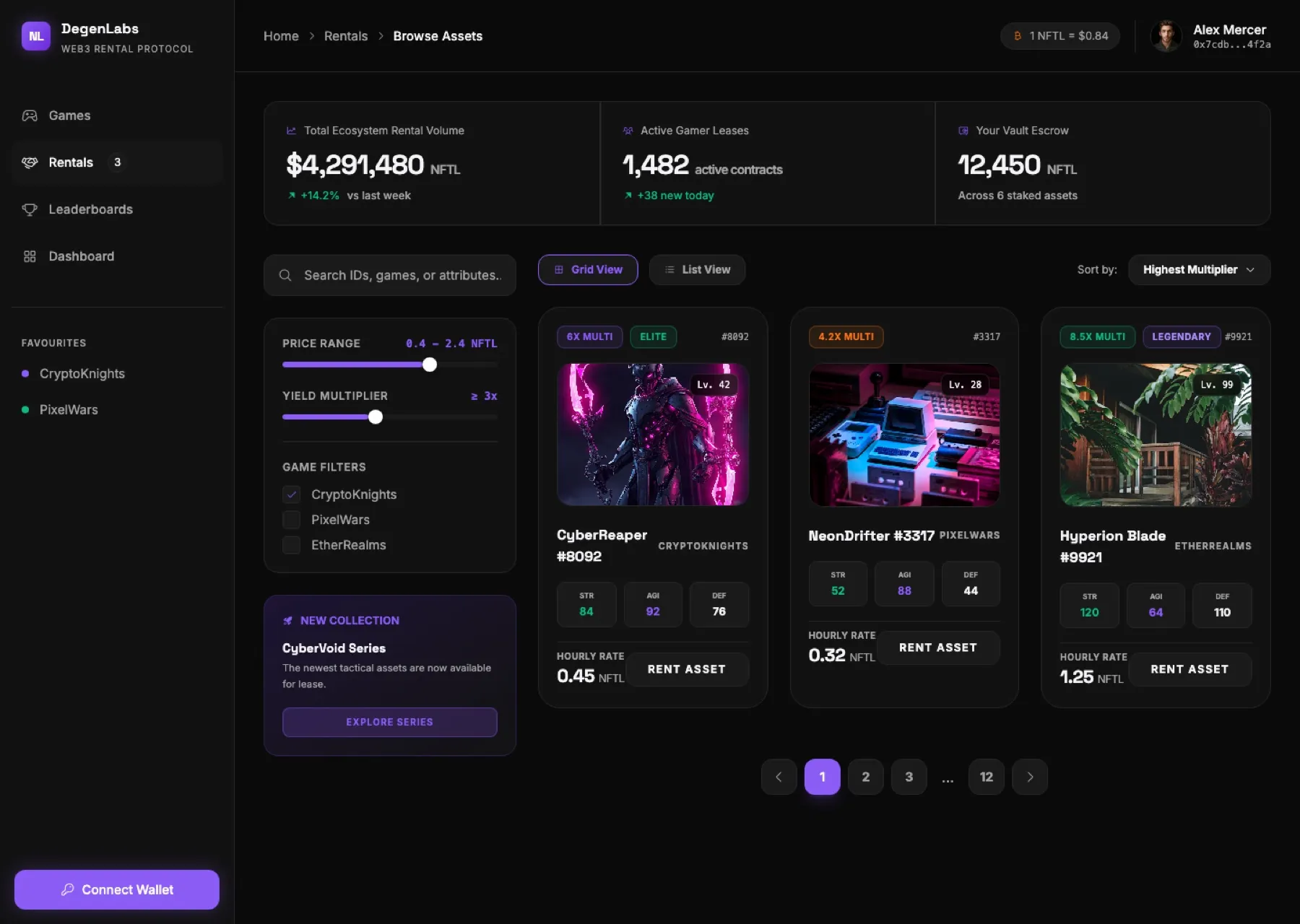
The public site and the product had to explain what the platform offered players, help them compare assets by rarity and yield, and then carry that decision into gameplay, the marketplace, or the dashboard.
04
What we designed
Public and marketing pages: We presented Nifty League as a game first, and only then explained the ownership, reward, and marketplace mechanics behind it.
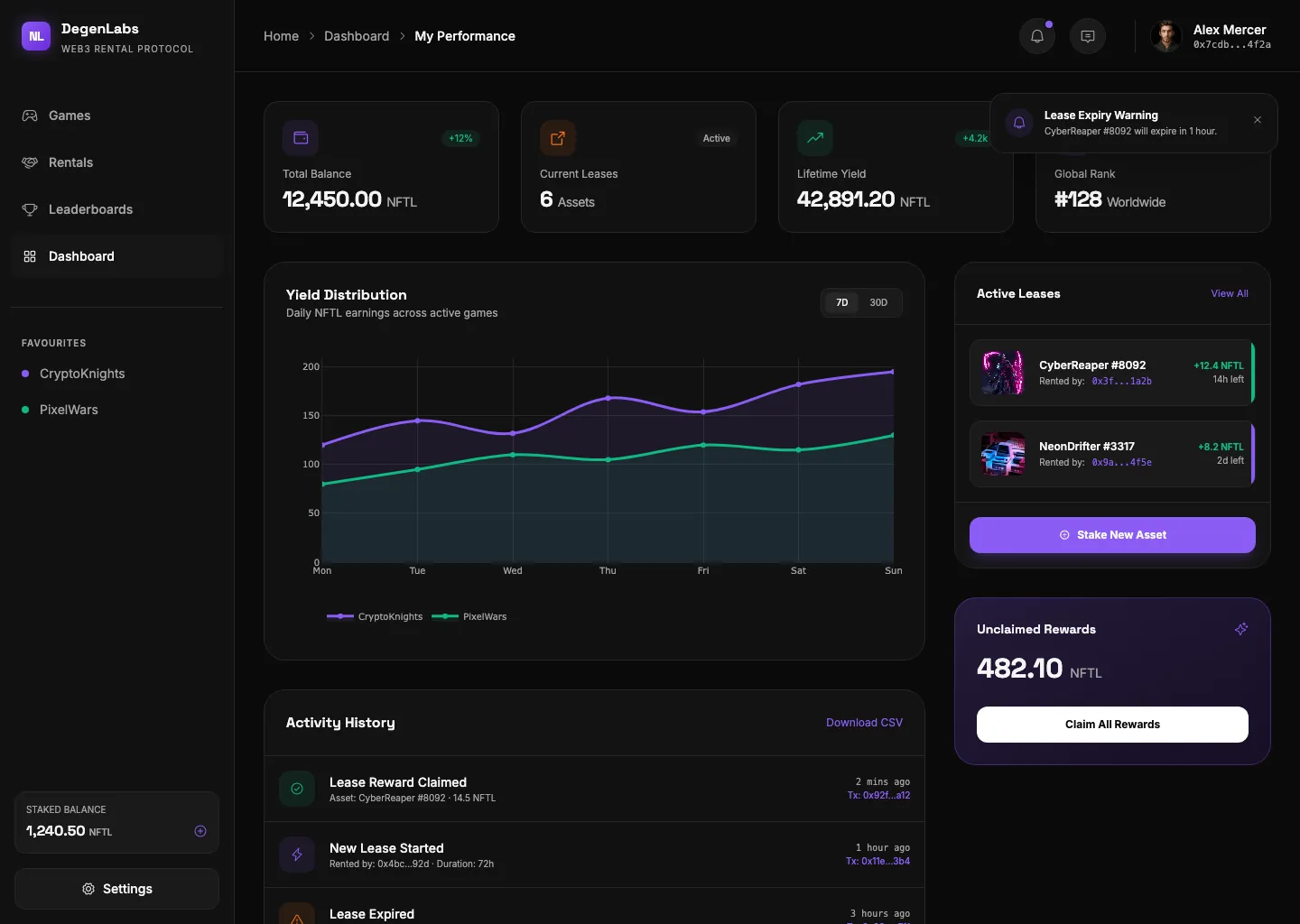
Game dashboard: We designed the main view for balances, rewards, active leases, inventory, activity history, and the actions that connect assets to gameplay.
Credit-system logic: We worked out how credits, rewards, and player progression fit into the game loop, so players saw credits as part of the game instead of an abstract token mechanic.
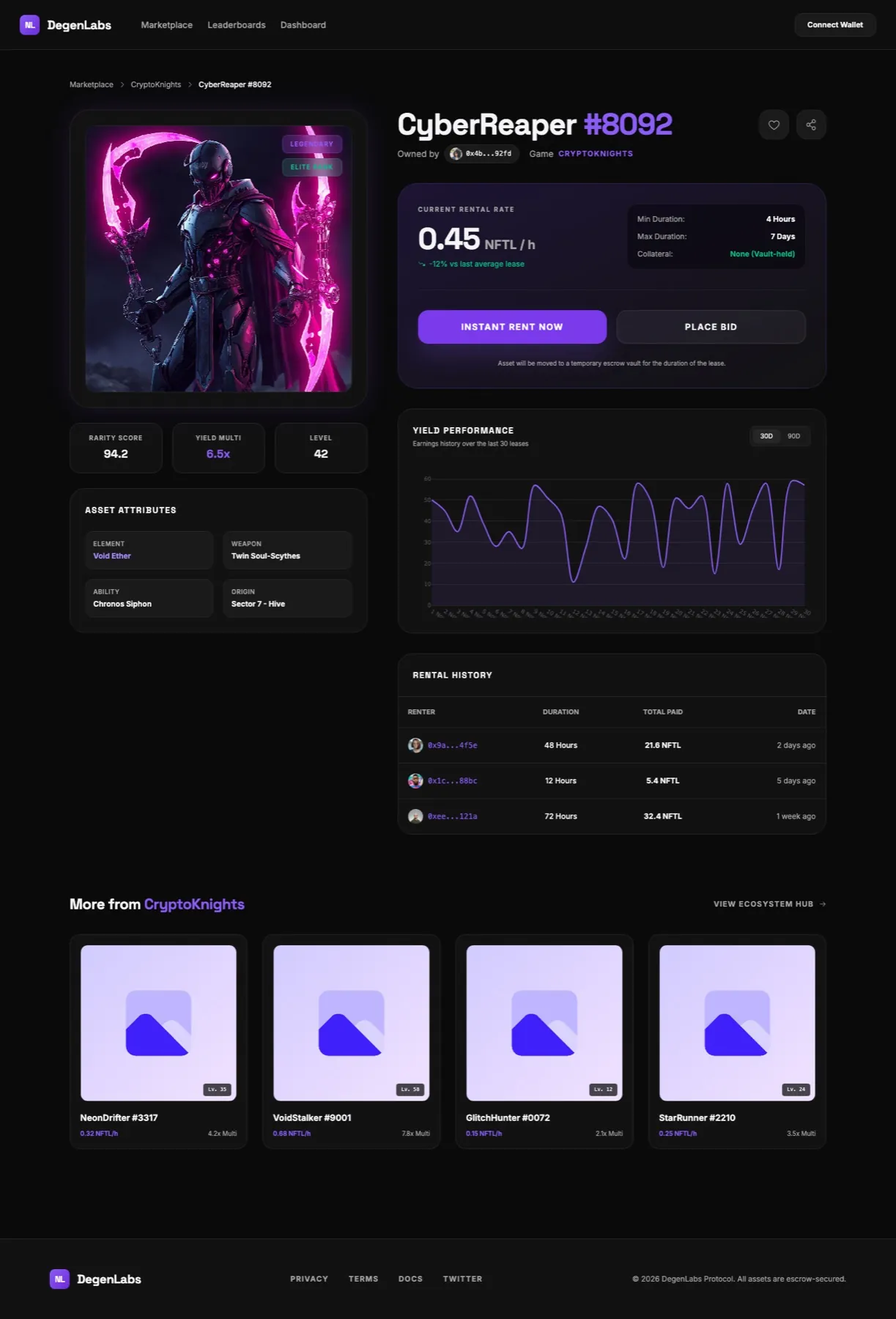
Asset and marketplace flows: We designed how players compare assets, inspect metadata, and read multiplier and yield signals, and then decide if they want to rent or own an asset.
05
Flow and interaction model
Marketplace to decision: Players browse assets, filter by game or category, and open a detail view with traits, rarity, yield history, and rental history.
Decision to action: On the asset page, renting straight away and placing a bid are separate actions. After that, the dashboard handles staking, lease management, reward claims, and inventory review.
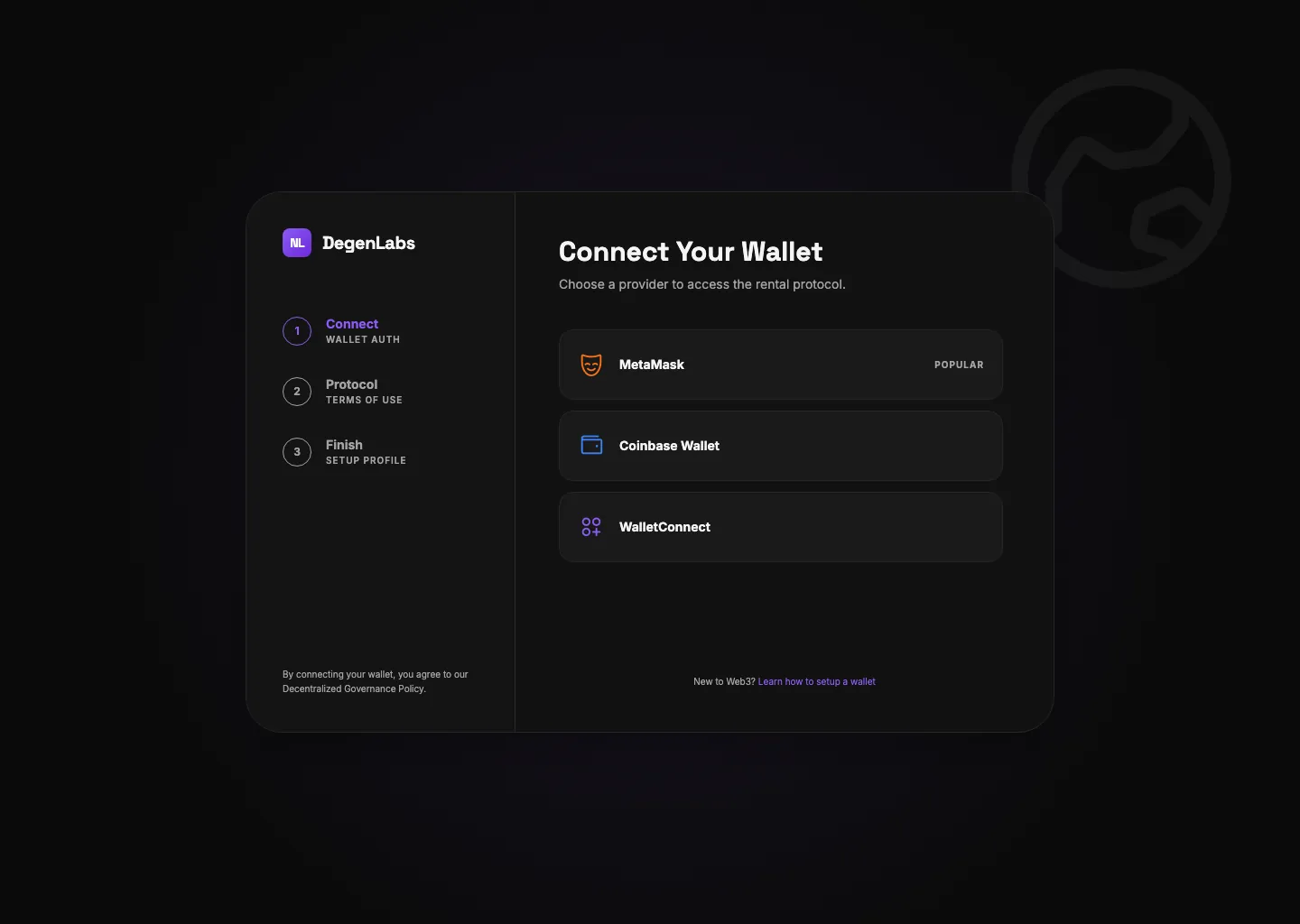
Action to recovery: The wallet onboarding, transaction failure, and missing-page screens show how players get back on track when the main flow breaks.
06
Extended surfaces
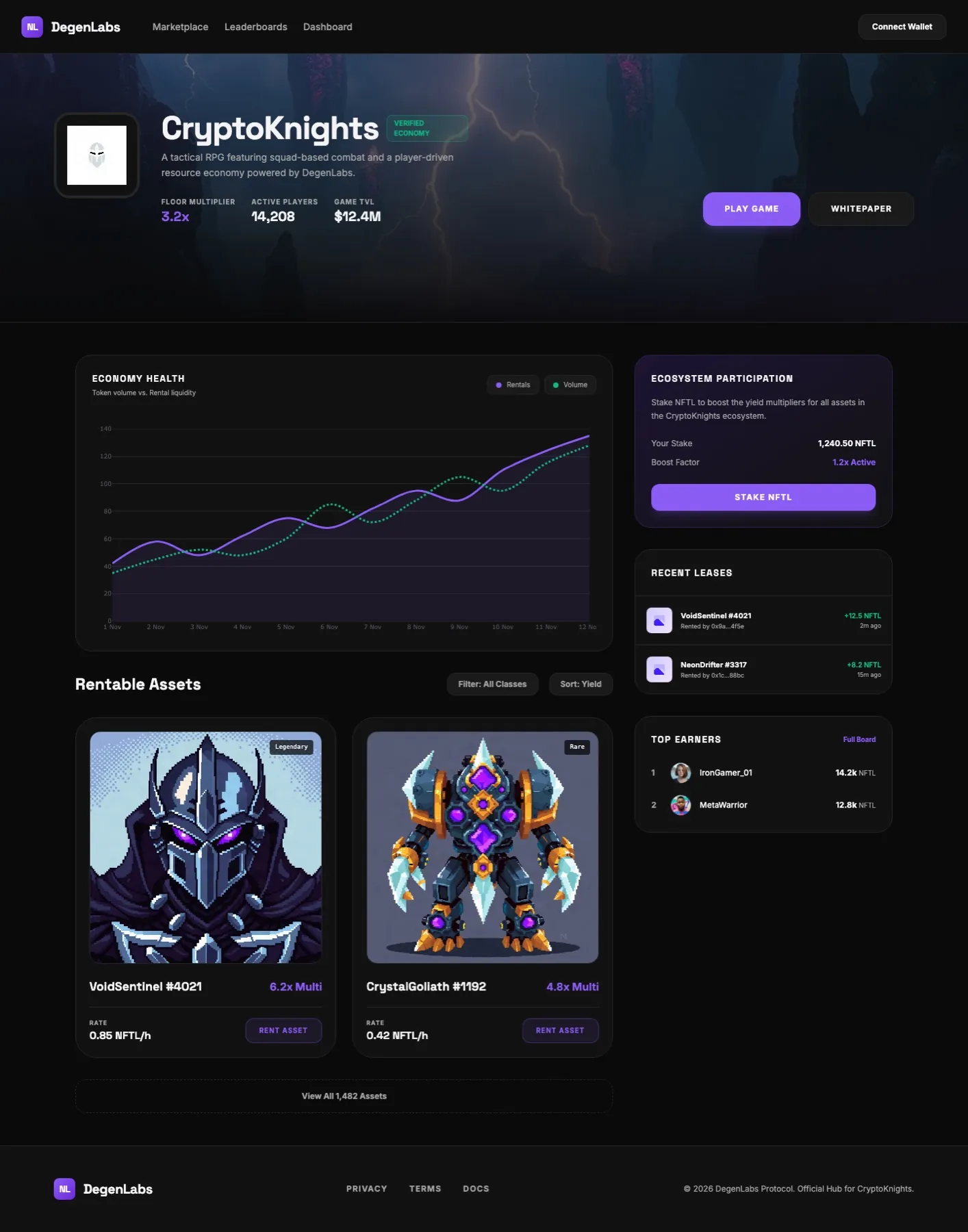
Game hub: Each game has its own page showing economy health, rentable assets, participation, staking prompts, recent leases, and top earners.
Leaderboard: Global rankings show how players are performing and which rewards are available.
Settings and wallet onboarding: Account setup, public profiles, notifications, privacy, and connected-wallet controls round out the main product flows.
07
Impact
We worked with the Nifty League team as lead designer on the gaming dashboards, gamification systems, player assets, credit-system logic, and the marketing and public pages for a Web3 gaming platform that later announced a $5M seed round.
Our work covered the whole player experience, from the public story to the dashboard, the credit and reward logic, and the flows that connected Web3 actions to the game.